
Many of our patients come to Aluma with a feeling they can't quite put into words, saying their skin just looks different than they remember. For some, the first concern is wrinkles on the forehead and between the eyes. So they try Botox, love the results, and later notice something else, such as uneven tone, dullness, or acne scars that have bothered them for years.
For others, skin texture is the reason they come in from the start. Texture refers to how smooth or uneven your skin looks and feels, including roughness, acne scars, and noticeable pores. These changes can affect your skin's overall appearance.
Skin surface imperfections are where microneedling fits into the larger rejuvenation picture. Microneedling creates tiny, controlled channels in the skin, prompting its natural repair process and supporting new collagen production. The goal with microneedling treatments is gradual improvement in skin clarity and brightness, smoother texture, and a more refreshed appearance. Below, we'll walk through what microneedling can do, what an appointment involves, and what to expect afterward.
What Is Microneedling?
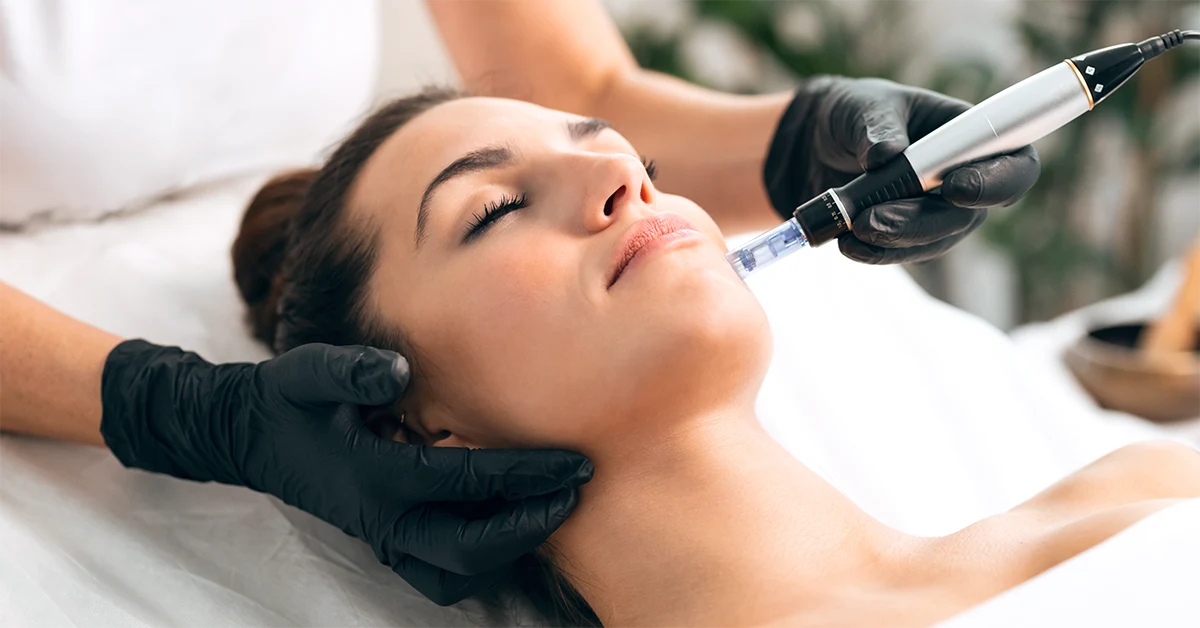
Microneedling is a treatment that uses very fine needles to create thousands of tiny channels in the skin. These controlled micro-injuries activate the body's natural repair process by stimulating fibroblasts, the cells that produce collagen and help rebuild the skin.3 This is why microneedling is also called collagen induction therapy. Early in-office microneedling treatments commonly used a handheld roller covered in fine needles. The technology later expanded to electronic pens, such as SkinPen, which move needles vertically in and out of the skin at adjustable depths. Both approaches create controlled micro-injuries that stimulate the skin's natural repair process.
Professional microneedling and at-home dermarolling are not the same treatment.
Needles around 1.0 mm long, performed in a clinical setting with a prescription topical anesthetic applied beforehand for comfort.
Much shorter needles, approximately 0.1 to 0.25 mm, and generally no prescription topical numbing.
In a 2015 study, 10 patients received six microneedling treatments spaced two weeks apart using a manual Dermaroller with 192 needles arranged in eight rows. Each needle measured 1.0 mm in length. Treatments were performed in a clinical setting, with a topical anesthetic applied beforehand for comfort. After treatment, skin biopsies showed significant increases in several collagen types, including newly formed collagen, along with improvements in wrinkles and skin texture.1
A 2021 study examined the SkinPen microneedling device specifically. Thirty-two participants completed four treatments spaced 4 weeks apart. Researchers noted improvements in skin density and elasticity, along with increased activity in a gene involved in collagen production, three months after the final session.2
The 2015 findings suggest that microneedling can produce structural changes in the skin that go beyond a temporary post-treatment glow.1 Furthermore, a separate publication reported visible improvements in facial wrinkles.3 Together, these findings support microneedling claims regarding skin renewal and a smoother-looking skin surface.
The Benefits of Microneedling
Microneedling can improve both skin texture and tone, depending on the concern being treated.
Texture
Skin texture refers to how smooth and even the skin looks and feels. Acne scars, fine lines, and enlarged pores can make its surface appear uneven.
Tone
Skin tone refers to the skin's overall color. Dark spots and uneven pigmentation reduce skin tone quality. However, tone results depend on the cause of the discoloration.11
What You Can Expect From a Treatment
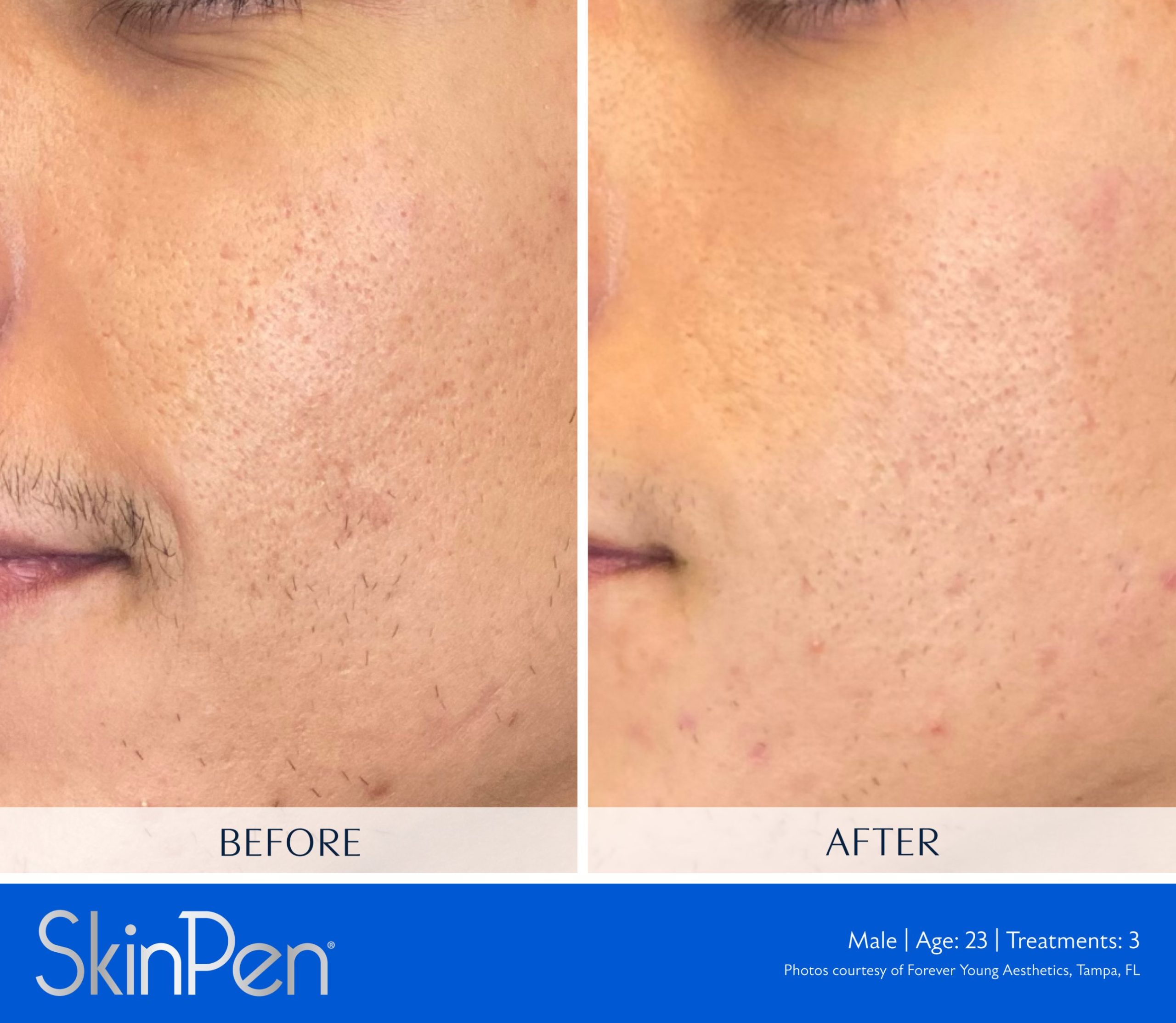
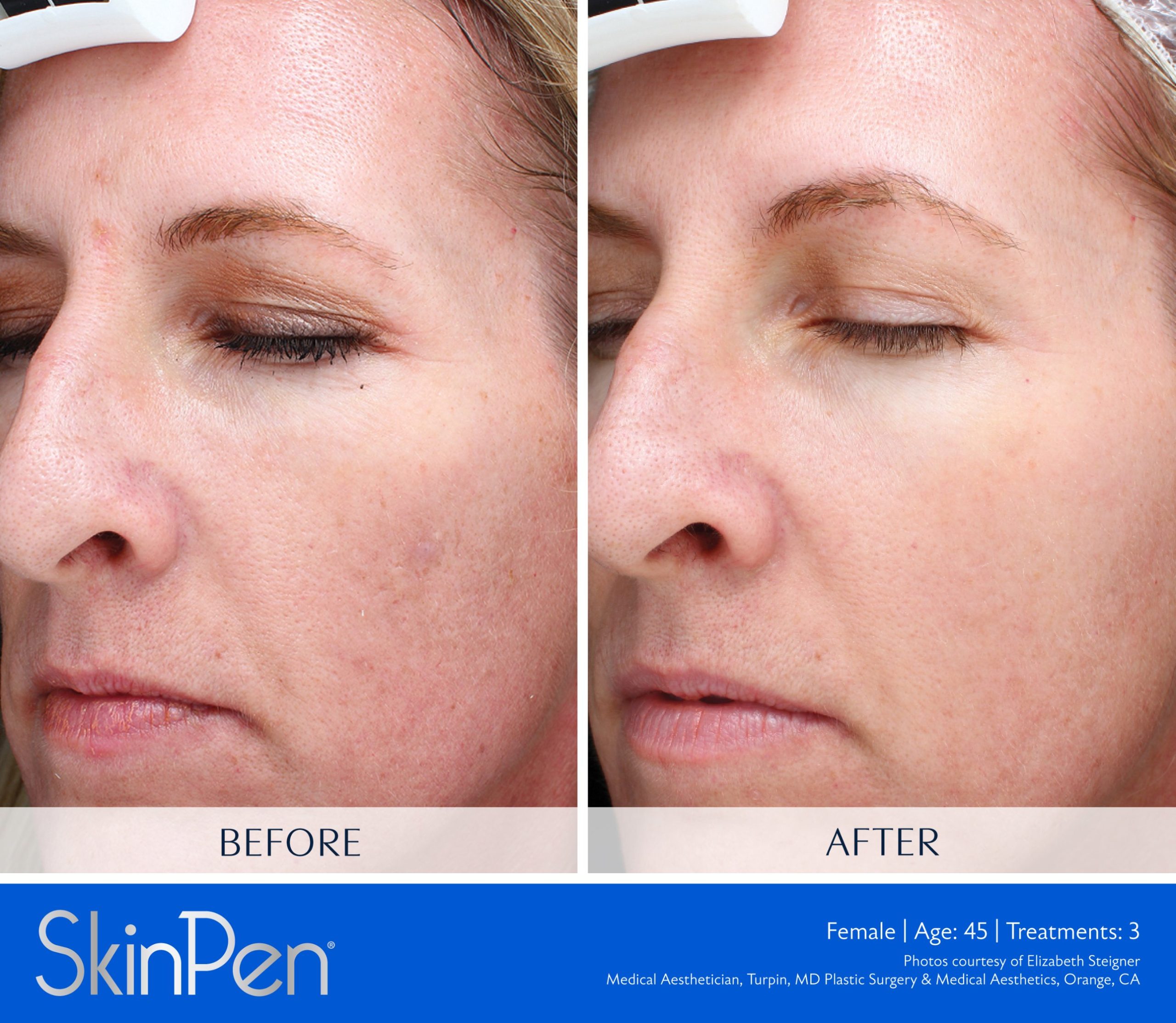
Smoother-looking skin and softer acne scars. By encouraging collagen production and tissue remodeling, microneedling helps reduce the appearance of acne scars and large pores. Treatments do not completely erase scars, but they result in smoother, more even texture.
Improvement in fine lines and wrinkles. A clinical study found significant improvement in facial and neck wrinkles three months after a series of four monthly sessions.2
Support for the skin's underlying structure. In SkinPen trials, researchers found improved skin density and elasticity, along with increased activity in a gene involved in collagen production.2
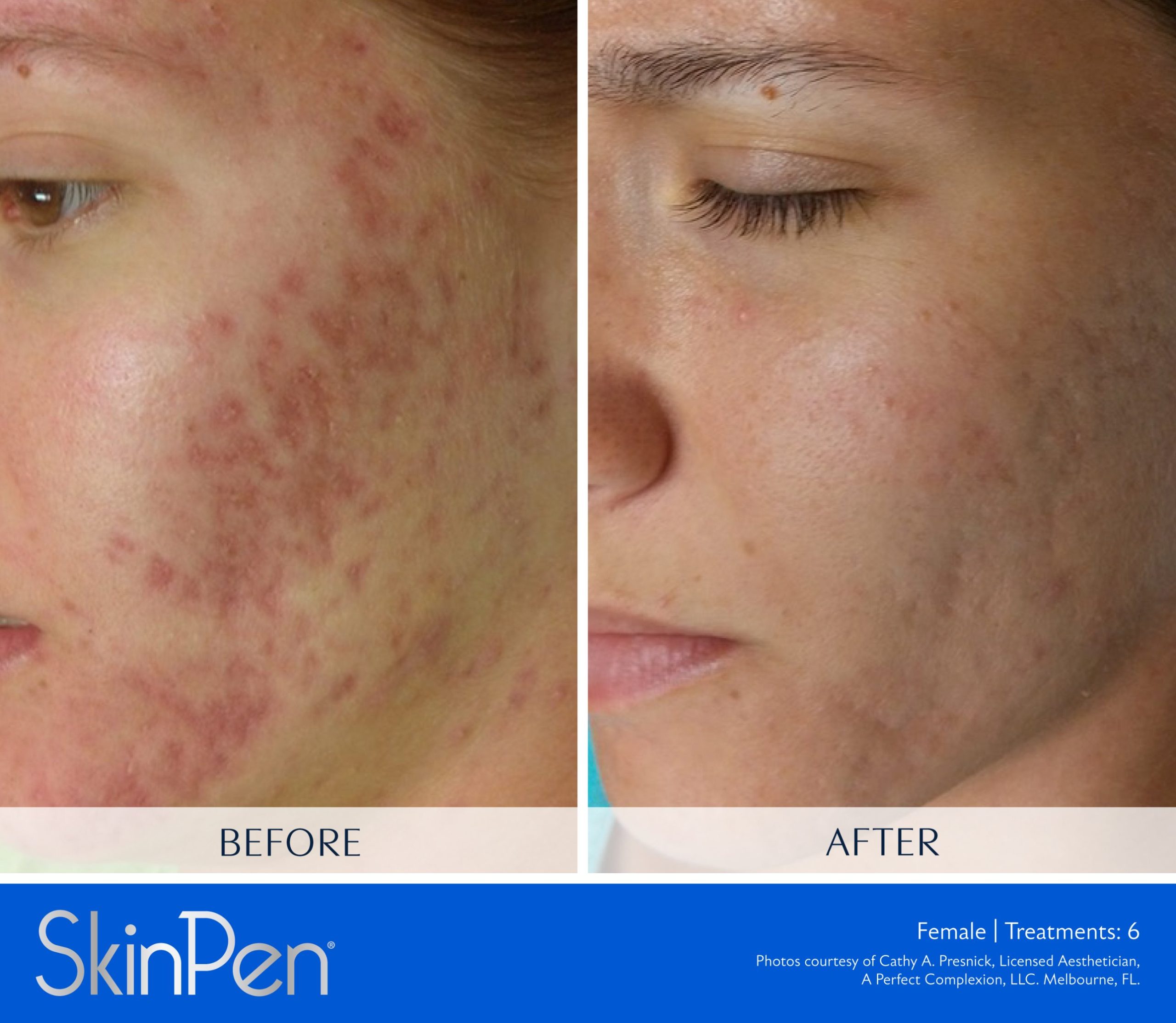
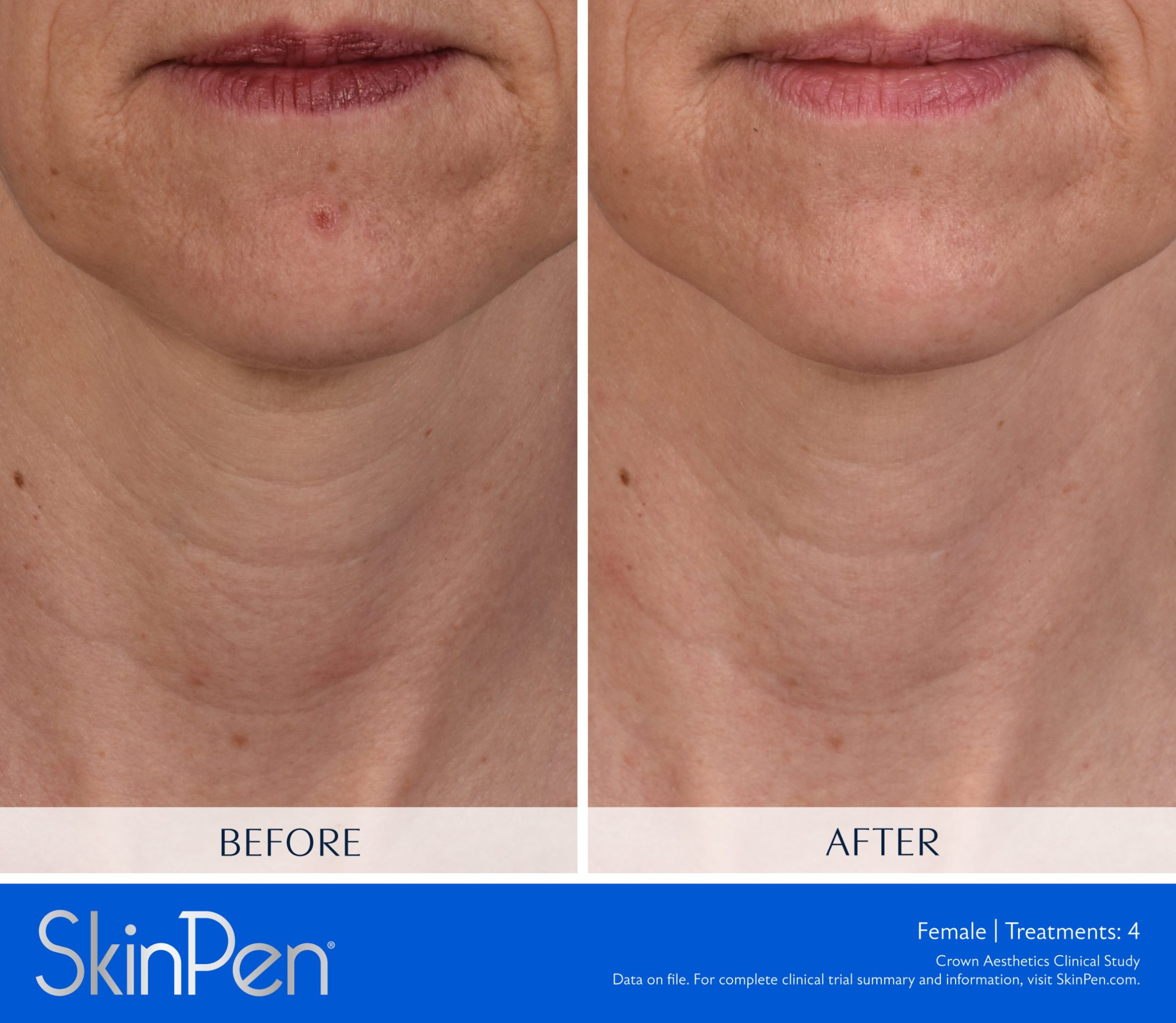
SkinPen results shown. Individual results vary.
Results do vary, and a series of 3 to 6 treatments is often needed to make a meaningful difference.
What to Expect During a Microneedling Treatment
Professional microneedling with a device such as SkinPen should be performed by an appropriately licensed provider with specific training in the procedure. SkinPen is a prescription device intended for use under medical supervision.4 Because its needles penetrate the skin deeply, proper technique and careful depth selection are essential to reduce the risk of infection and skin injury.
Many patients worry microneedling will hurt and ask us this question. Fortunately, when getting microneedled in a medical setting, prescription numbing cream keeps the treatment pretty comfortable. The forehead typically feels more sensitive because the skin is thinner and closer to the bone.
Most patients describe a light prickling or tickling sensation.
Your Treatment at Aluma, Step by Step
- 01Cleanse
Microneedling treatments at Aluma begin with a gentle cleanse to remove makeup, sunscreen and surface oils.
- 02Numb
A prescription benzocaine, lidocaine, tetracaine topical numbing cream (BLT cream) is then applied to help numb the treatment area.
- 03Prepare
Before microneedling begins, the BLT cream is thoroughly removed, and your skin is wiped with an antiseptic.
- 04Apply glide gel
A thin layer of Skinfuse Lift HG, a hyaluronic acid-based gel, is applied to help the device glide smoothly over the face while reducing friction.
- 05Treat
Our certified advanced esthetician begins each treatment area at a shallow depth of 0.25 mm to assess the skin's response before gradually adjusting the depth within SkinPen's treatment guidelines. Working in small sections, the provider gently holds the skin taut and uses slow, controlled passes horizontally, vertically, and in small circular movements to achieve even coverage. The eyelids and areas inside the orbital rim are not treated.
This careful, personalized approach supports consistent coverage while addressing each patient's skin concerns and needs.
What Is the Downtime After Microneedling?
Most patients experience redness similar to a mild sunburn, along with tightness and dryness, for 24 to 72 hours after SkinPen microneedling. Light flaking may also occur, usually around day 3 to 5, and can last several days. Many patients return to work the next day, although some pinkness may still be visible.
According to SkinPen's guidance from Revance Aesthetics, the SkinPen distributor, patients can apply makeup and sunscreen after 24 hours, while avoiding sweaty exercise and sun exposure for the first 72 hours. They also recommend Skinfuse Lift HG to help prevent dryness during the first 24 hours after SkinPen treatment. This is the same gel used during the procedure and is often sent home with patients for continued use as directed by their provider.
Retinol, exfoliating acids, and scrubs should be paused until the skin is no longer sensitive or peeling, typically 2 weeks after treatment.
First 24 hours
Redness, tightness and dryness. Use Skinfuse Lift HG as directed; hold off on makeup and sunscreen.
Through 72 hours
Makeup and sunscreen are fine after 24 hours. Avoid sweaty exercise and sun exposure.
Days 3 to 5
Light flaking may begin and can last several days.
Around 2 weeks
Resume retinol, exfoliating acids and scrubs once skin is no longer sensitive or peeling.
Is Microneedling Right for You?
SkinPen microneedling may be a good option if you want to soften the appearance of facial acne scars, mild discolorations, rough skin texture, large pores, or neck wrinkles. According to Revance, SkinPen is FDA-cleared for adults 22 and older; facial acne scar treatment is cleared for all skin tones (Fitzpatrick types I to VI), and neck wrinkle treatment is cleared for Fitzpatrick types II to IV.9
The Fitzpatrick scale groups skin into six types based on its natural color and how it typically responds to sun exposure, specifically burning and tanning.8
Beyond your Fitzpatrick skin type, the microneedling technology matters.
Radiofrequency (RF) microneedling combines tiny needles with energy that heats tissue beneath the skin. It can suit a range of skin tones, but careful patient selection, device settings, and provider experience are essential. The added heat introduces risks of thermal injury, and the FDA has reported serious complications with certain uses, including burns, scarring, fat loss, and nerve damage.10
At Aluma, we choose SkinPen because it supports the skin's natural collagen-building response through controlled micro-injuries without radiofrequency or added heat. This avoids the thermal component of RF treatment and potential complications while offering an FDA-cleared option to improve skin texture.
How Much Does Microneedling Cost?
Microneedling pricing reflects more than the treatment itself; it also reflects the equipment, single-use supplies (such as the microneedling heads and treatment gels), and the professional qualifications involved. When comparing options, ask which device is used and whether it is FDA-cleared. Some products sold for home use exfoliate only the skin's surface, while medical microneedling devices penetrate living skin layers beneath the outermost layer of dead cells. They include the deeper epidermis, where new skin cells form, and the dermis, which contains collagen, elastin, blood vessels, and nerves.
At Aluma, we trust in SkinPen for its precision, safety features, and clinical evidence. Its adjustable needle depth lets us tailor treatment to different areas, and each session uses a sterile, single-use needle cartridge. In addition, SkinPen Precision Elite creates more than 1,600 controlled micro-injuries per second, enhancing the skin's natural repair response and collagen induction.
Not sure where to start? We can help you decide whether microneedling fits your skin concerns and goals. Visit our Portland microneedling treatment page for current pricing, treatment options, and consultation scheduling.
References
- Domyati M, Barakat M, Awad S, Medhat W, El-Fakahany H, Farag H. Multiple microneedling sessions for minimally invasive facial rejuvenation: an objective assessment. Int J Dermatol. 2015;54(12):1361–1369. doi:10.1111/ijd.12761
- Wamsley CE, Kislevitz M, Barillas J, et al. A single-center trial to evaluate the efficacy and tolerability of four microneedling treatments on fine lines and wrinkles of facial and neck skin in subjects with Fitzpatrick skin types I–IV: an objective assessment using noninvasive devices and 0.33-mm microbiopsies. Aesthet Surg J. 2021;41(11):NP1603–NP1618. doi:10.1093/asj/sjab052
- Schmitt L, Marquardt Y, Amann P, et al. Comprehensive molecular characterization of microneedling therapy in a human three-dimensional skin model. PLoS One. 2018;13(9):e0204318. doi:10.1371/journal.pone.0204318
- SkinPen User Manual. crownaesthetics.com
- US Food and Drug Administration. Microneedling Devices. fda.gov
- Revance Academy. Performing the SkinPen Treatment (course). revanceacademy.com
- Crown Aesthetics. SkinPen + SkinFuse Treatment Kit: Patient Labeling. skinpen.com. Accessed 1 Oct. 2026.
- "Skin Phototype." DermNet. dermnetnz.org. Accessed 1 Oct. 2026.
- Revance. "Official Site: Revance Aesthetics." Revance Aesthetics. revanceaesthetics.com. Accessed 1 Oct. 2026.
- Pudukadan D. Treatment of acne scars on darker skin types using a noninsulated smooth motion, electronically controlled radiofrequency microneedles treatment system. Dermatol Surg. 2017;43(suppl 1):S64–S69. doi:10.1097/DSS.0000000000000894
- American Academy of Dermatology Association. "Microneedling Can Fade Scars, Uneven Skin Tone, and More." American Academy of Dermatology. aad.org. Accessed 1 Oct. 2026.
Considering Microneedling?
We can help you decide whether SkinPen microneedling fits your skin concerns and goals, starting with a consultation.
Book a consultation