Botox & Dysport

Botox & Dysport
Neuromodulators in Portland
Repeated facial movements, along with aging skin, cause fine lines and wrinkles. Botox and Dysport are neuromodulators that relax the underlying muscles, softening lines and helping prevent new wrinkles from forming. Although six FDA-approved neuromodulators are available in the United States, we believe Botox and Dysport provide the most reliable results and duration.
Where Neuromodulators Work
Forehead
Smooths horizontal lines, with typical dosing of 10–20 Botox units, depending on muscle strength, forehead size, and desired results.
Around the Eyes
Softens crow’s feet and the vertical “11” lines between the brows; treatment ranges from 5–10 Botox units per side for crow’s feet and 20–25 Botox units for the glabella.
Lower Face
Relaxes the downward-pulling muscles of the lower face and neck, subtly lifting the entire face, typically using 25–35 Botox units.
Real Botox and Dysport Transformations
See the difference Botox and Dysport can make. These before-and-after examples highlight their unmatched ability to smooth wrinkles.
Botox and Dysport Add-Ons
Optional add-ons can subtly enhance your results. These areas are easy to treat during your visit. Dysport works the same across all applications listed below.
Botox for Jaw Pain
By relaxing the overactive masseter muscles, Botox reduces jaw tightness, teeth clenching, and associated discomfort. It can also create a slimmer jawline when performed over time. Treatment typically requires around 15 to 25 units per side, depending on muscle strength and individual needs.
Botox for Neck Bands
Botox for neck bands (platysmal bands) softens the vertical tendon-like bands that appear when smiling or talking. These bands become more noticeable with age as the skin thins. Treatment is typically up to 5 units per band.
Botox for Brow Lift
By relaxing the muscle that pulls the tail of the brows downward, Botox allows them to lift higher, creating a more awake appearance. This treatment typically requires 2 to 5 units per side.
Botox for Orange-Peel Chin
Botox for a dimpled or “orange peel” chin smooths the appearance of texture.
These small dimples result from overcontraction of the mentalis muscle. Botox gently relaxes the muscle, softening the look of puckering. Treatment usually requires 6 to 10 units.
Botox for Gummy Smile
A gummy smile occurs when the upper lip lifts too high during smiling, exposing more gum than desired. Botox relaxes the small muscles that lift the upper lip, softening the lift and revealing just the right amount of teeth.
Botox for Down-Turned Smile
Overactive muscles that run from the corners of the mouth to the jawline pull the lips downward, creating a sad appearance. Botox relaxes these muscles, softening the downward pull and allowing the smile to turn upward naturally. Treatment is typically 2 to 6 units per side, depending on muscle activity and desired lift.
Our Botox Process
1
Botox Preperation
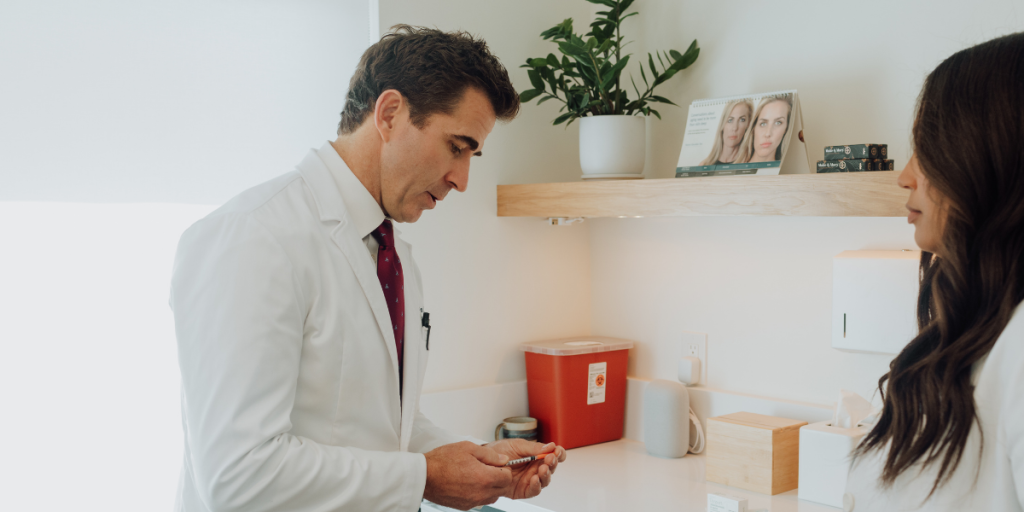
Dr. Brigham reviews your concerns and creates a personalized plan, including estimated units. Then your skin is cleansed to ensure a safe, ready-to-treat area.
2
Botox Administration
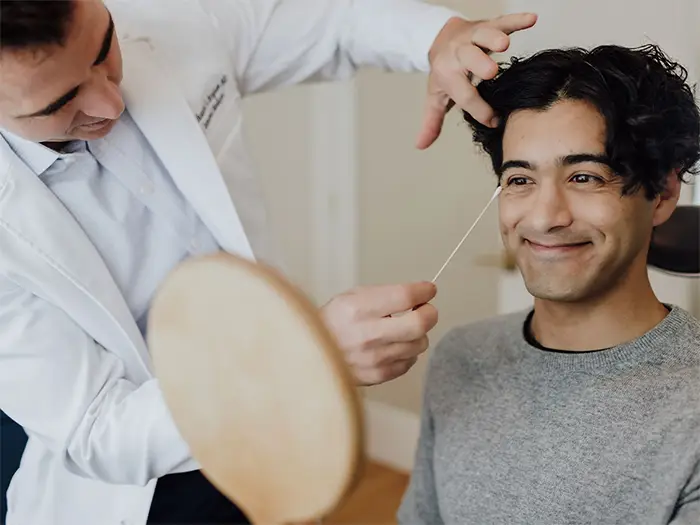
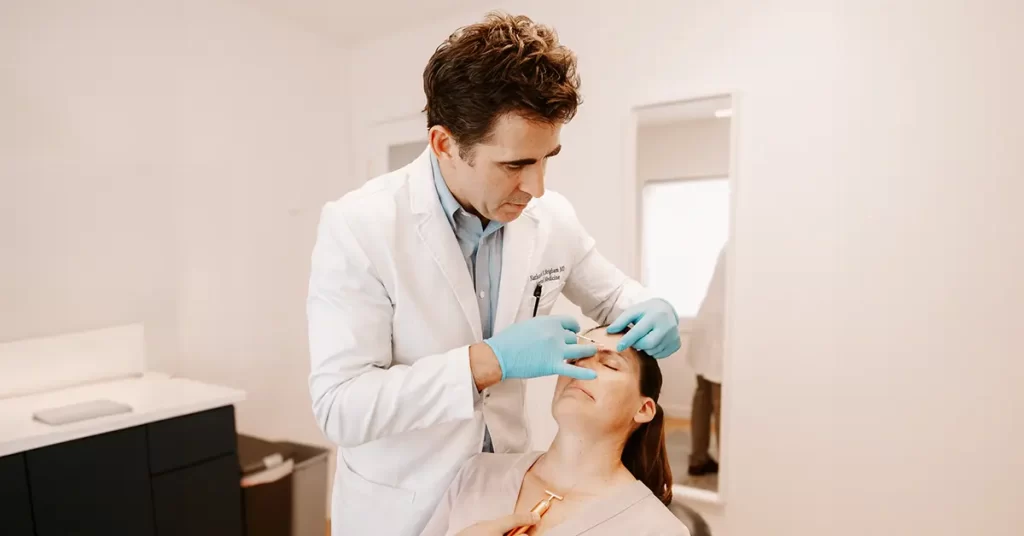
Ultra-fine-gauge needles are used for nearly painless Botox injections, followed by gentle icing to minimize redness and reduce the risk of bruising.
3
Follow Up
New patients receive a 2-week follow-up appointment to ensure optimal results, while returning patients receive a phone check-in. Any necessary touch-ups are complimentary, within reason.
Your Botox and Dysport MD
Meet Dr. Brigham
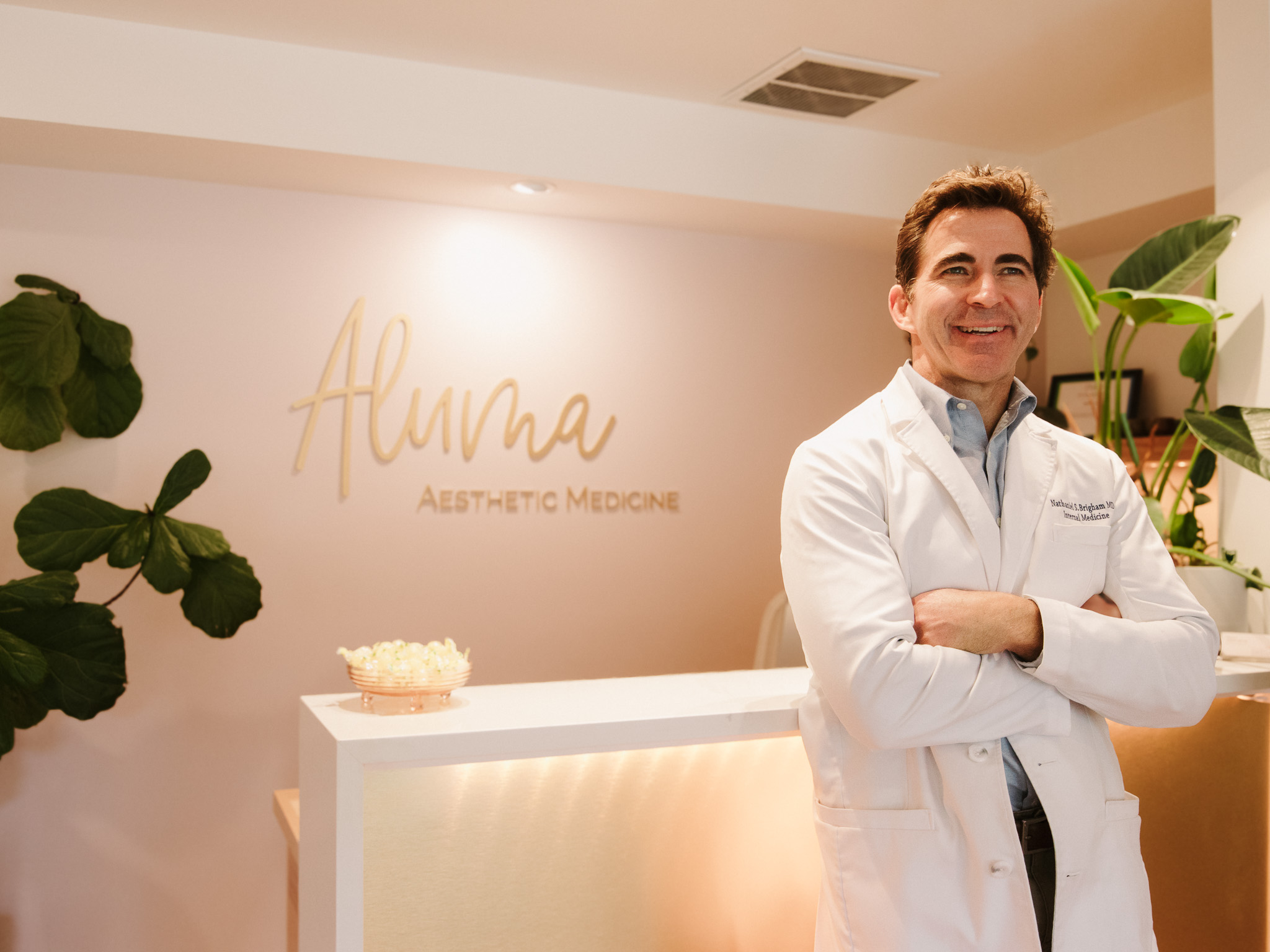
Dr. Brigham is a board-certified physician with over 20 years of medical experience and more than 8 years dedicated to aesthetic medicine. As a practicing hospitalist, he brings a high level of clinical judgment, safety, and anatomical expertise to every treatment. His training includes over 500 hours of advanced education with leading experts in the field, and he continues to refine his technique through quarterly in-person training, ensuring patients receive results that reflect the most current, natural approaches in aesthetics.
The Aluma Experience
At Aluma, patients are treated like family. From thoughtful preparation to attentive follow-up, we guide you every step of the way because nothing makes us happier than seeing you love your results.
Botox and Dysport Before & After Care
Before
Avoid antinflammatory medications, including Advil, Aleve, and Aspirin, for 2 days before your appointment.
Arrive with a clean, makeup-free face, though our staff will cleanse the treatment area.
Take 1,000 mg of Tylenol, 45 minutes before your appointment, to reduce any discomfort.
Arrive with a clean, makeup-free face, though our staff will cleanse the treatment area.
Take 1,000 mg of Tylenol, 45 minutes before your appointment, to reduce any discomfort.
After
Avoid applying pressure to the treated areas or lying face down for 48 hours.
Skip high-intensity exercise for 24 hours to allow the neuromodulator to properly bind.
You may gently wash your face the same day, using upward motions away from the eyes and brows.
Avoid skincare products and makeup in the area for at least 4 hours.
Skip high-intensity exercise for 24 hours to allow the neuromodulator to properly bind.
You may gently wash your face the same day, using upward motions away from the eyes and brows.
Avoid skincare products and makeup in the area for at least 4 hours.
Botox & Dysport FAQs
When will I see my Botox or Dysport results?
Both Botox and Dysport are neuromodulators that relax targeted muscles to soften lines, but they have slightly different onset times. Dysport usually starts showing results within 2 to 3 days, while Botox typically begins working in 3 to 5 days. For both treatments, full results are achieved at 14 days.
How long does Dysport or Botox last?
The effects of Dysport and Botox vary by area, muscle strength, and dosage. Generally, results last 3–4 months; larger doses tend to extend the duration.
Are Botox and Dysport priced alike?
At Aluma, Dysport is converted to Botox-equivalent units with the same price per unit. Ultimately, the choice of product comes down to your personal preference.
How do Dysport and Botox work?
Botox blocks nerve signals to muscles by binding to acetylcholine receptors. This prevents muscle contraction, thereby smoothing wrinkles and softening lines. Results are temporary; thus, retreatments are required to maintain them as muscles regain function. Dysport works in the same fashion.
Are there side effects from Botox or Dysport?
While Botox and Dysport are generally very safe, rare side effects can occur. These may include: drooping eyelids or eyebrows (ptosis), uneven smile or asymmetry, Flu-like symptoms, and muscle weakness in the nearby treatment area. trouble swallowing or speaking (very uncommon, usually with neck injections), allergic reactions (rash, itching, swelling, or difficulty breathing-extremely rare).
Botox vs Dysport?
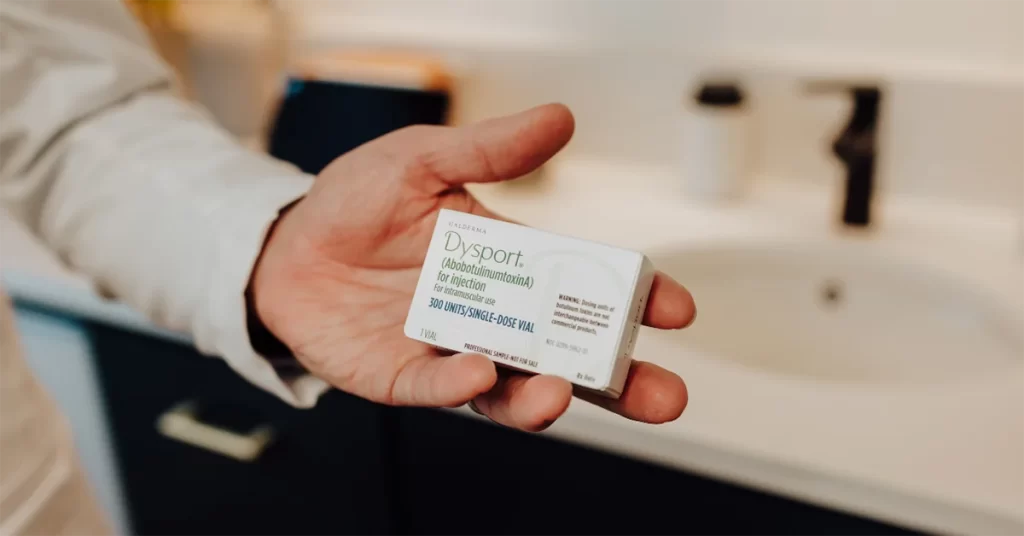
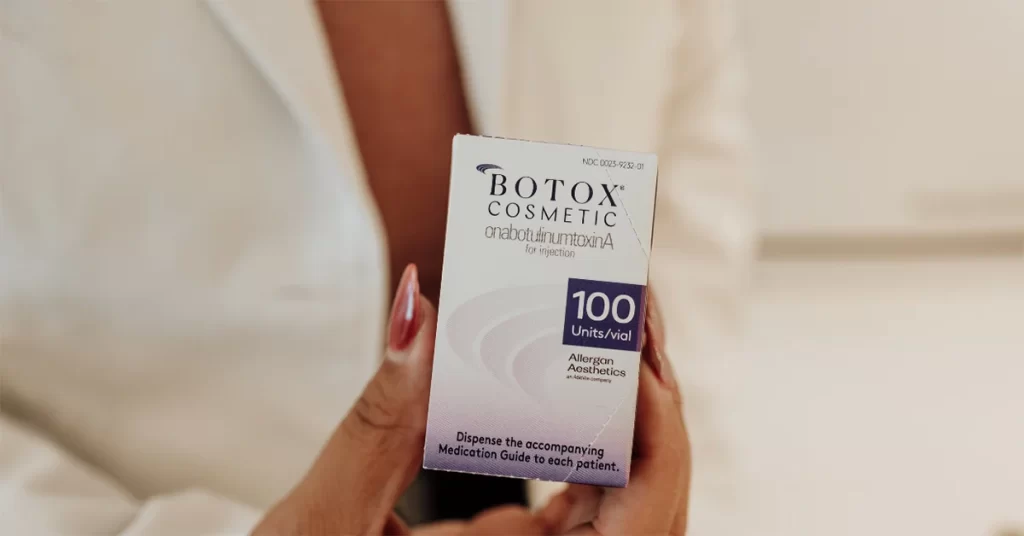
Botox was FDA-approved in 2002, and Dysport in 2009. Both are trusted neuromodulators used to reduce wrinkles, including forehead lines, crow’s feet, and frown lines. At Aluma, they are reconstituted in the same proportions, and Dysport dosing (3 units per 1 Botox unit) is converted to Botox equivalents, making them identical in cost and unit dose for transparency.
Our Botox & Dysport Insights
 As we age, the eyes and brows are often among the first areas to show visible signs of change. The…
 I will be candid here: “Yes, for many it can work wonders, but not all.” While many think of Botox…
- As Portland moves into 2026, patients are choosing natural, subtle, and regenerative aesthetic treatments. This guide explores the injectable trends…
Not Sure if Neuromodulators are Right for You?
Schedule a consultation with Dr. Brigham to talk through your goals, ask questions, and get a personalized recommendation. No pressure, just guidance.